

An FBO — Fixed Base Operator — is the terminal and service organisation that looks after private aircraft at an airport. This guide explains what an FBO does, how private terminals across Asia actually work, and what to expect from arrival to kerb.
What Is an FBO?
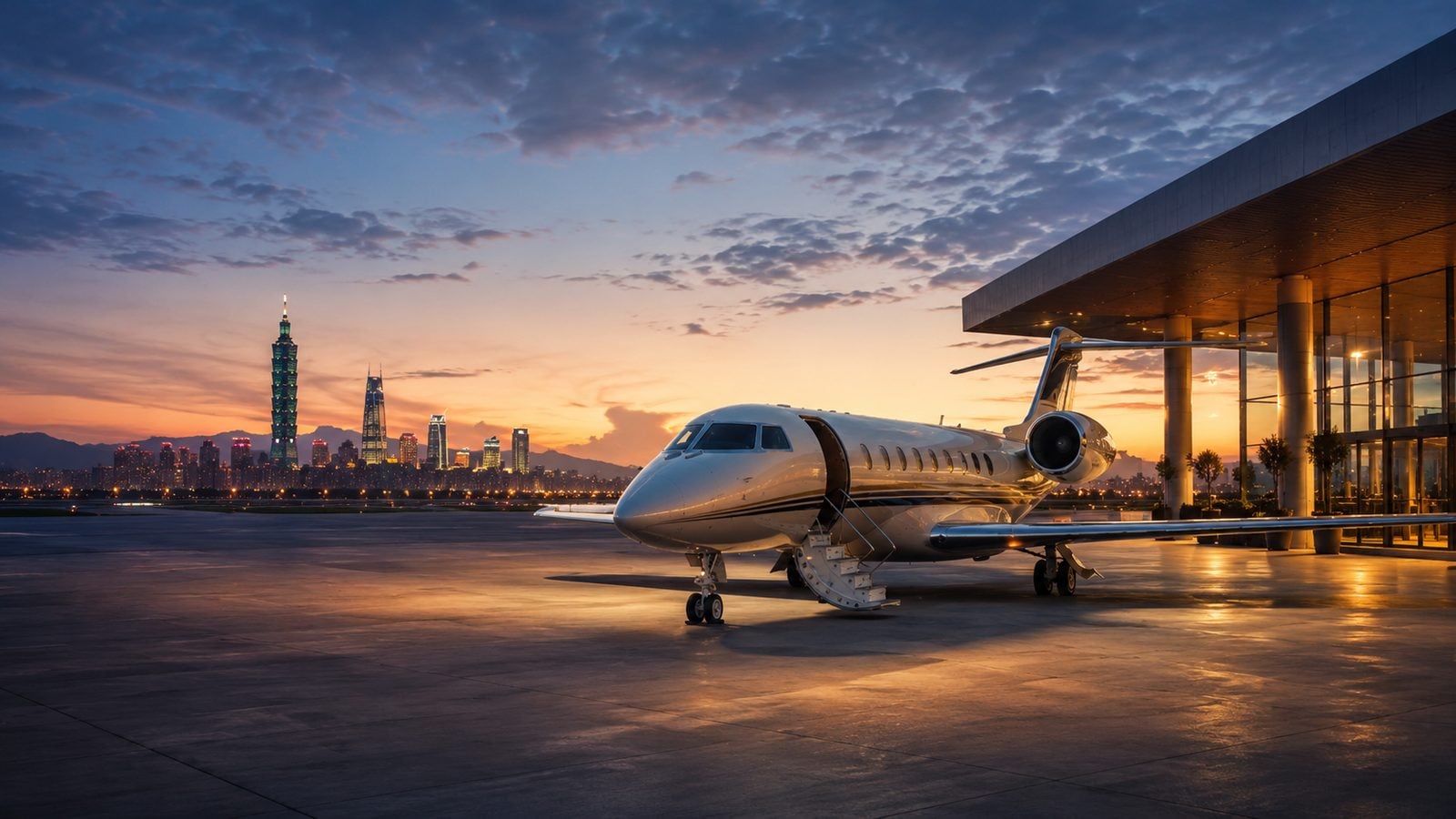
An FBO is the private-aviation equivalent of a commercial terminal, an airline lounge and a ground handling department combined into one building, usually on the opposite side of the field from the passenger terminal.
The name comes from American aviation regulation, where an operator with a fixed base at an airfield was distinguished from itinerant operators. The term travelled with business aviation and is now used worldwide — although in Asia you will just as often hear “private jet terminal”, “VIP terminal”, “general aviation terminal” or “business aviation centre”. They describe the same thing.
For a passenger, the FBO is the entire airport experience: you are driven to the door, you walk through a small private lounge, immigration and customs are processed in the same building, and you board the aircraft a short walk or short drive away.
What FBO Services Include
A full-service FBO at a major Asian gateway normally provides:
- A private arrivals and departures lounge, separate from the commercial terminal.
- Dedicated customs, immigration and quarantine (CIQ) processing, often at a desk inside the building.
- Kerbside or airside vehicle access — at many Asian FBOs the car is permitted to drive to the aircraft steps.
- Baggage handling and screening for the private terminal only.
- Aircraft fuelling, ground power and servicing.
- Ramp handling and marshalling, plus overnight parking or hangarage.
- Crew facilities — flight planning room, weather briefing, rest area, showers.
- Catering coordination and ground catering in the lounge.
- Concierge services: ground transport, hotel arrangement, meeting rooms.
- Aircraft security and restricted-area access control.
Not every private terminal in Asia offers all of these. At a smaller regional field the FBO may be a general aviation apron with a handling agent and a mobile immigration officer, and the service is arranged rather than resident. ASA confirms exactly what is available at each airport on your routing before the trip is quoted.
FBO vs Commercial Terminal — What Actually Differs
| Commercial terminal | FBO / private terminal | |
|---|---|---|
| Arrival before departure | Hours ahead for an international flight | Shortly before departure |
| Check-in | Airline desk, queue, bag drop | Passport handed over in the lounge |
| Security screening | Central screening hall, shared queue | Screened within the private terminal |
| Immigration | Main immigration hall | Desk inside the FBO, or officer at the aircraft |
| Distance to aircraft | Gate walk plus airbridge or bus | Short walk, or car to the aircraft steps |
| Baggage | Belt, carousel, waiting | Loaded and unloaded at the aircraft, delivered to the car |
| Companions | Landside only | Can usually accompany you into the lounge |
The time difference is the reason a regional flight on a private jet routinely beats the same journey by scheduled service door-to-door even when the flying time is identical.
Private Terminals and FBOs Across Asia
| Airport | Code | Private terminal arrangement |
|---|---|---|
| Bangkok Don Mueang | DMK | Dedicated private jet terminal on the general aviation side — the primary business aviation field for Bangkok, with its own CIQ |
| Bangkok Suvarnabhumi | BKK | VIP and general aviation handling alongside the main terminal; slot and parking constrained at peak |
| Phuket | HKT | Private terminal serving Andaman resort traffic; heaviest demand November–April |
| Chiang Mai | CNX | General aviation handling with CIQ arranged on arrival |
| Singapore Seletar | XSP | Singapore’s dedicated business aviation airport, with full CIQ in the private terminal |
| Singapore Changi | SIN | Separate CIP/VIP terminal used for private arrivals; Seletar generally preferred for business jets |
| Hong Kong | HKG | Business aviation centre with its own terminal, apron and CIQ |
| Kuala Lumpur Subang | SZB | Malaysia’s business aviation field, with a dedicated private terminal |
| Kuala Lumpur | KUL | VIP handling available; Subang is the standard choice for private jets |
| Jakarta Halim | HLP | Jakarta’s business aviation airport with an executive terminal, closer to the city than Soekarno-Hatta |
| Bali Denpasar | DPS | General aviation terminal; peak-season parking is the constraint |
| Manila | MNL | General aviation terminals on the private side of the field |
| Ho Chi Minh City | SGN | VIP terminal with private CIQ processing |
| Hanoi | HAN | VIP terminal on the general aviation apron |
| Taipei Songshan | TSA | City airport with business aviation handling; TPE Taoyuan used for larger aircraft |
| Phnom Penh | PNH | VIP terminal handling; permits filed with the SSCA in advance |
| Colombo Ratmalana | RML | Dedicated general aviation airport close to central Colombo; CMB Bandaranaike for larger aircraft |
Terminal operators, opening hours and CIQ arrangements change. ASA confirms the current arrangement at each airport on your routing when the trip is quoted.
What Happens When You Arrive at an FBO
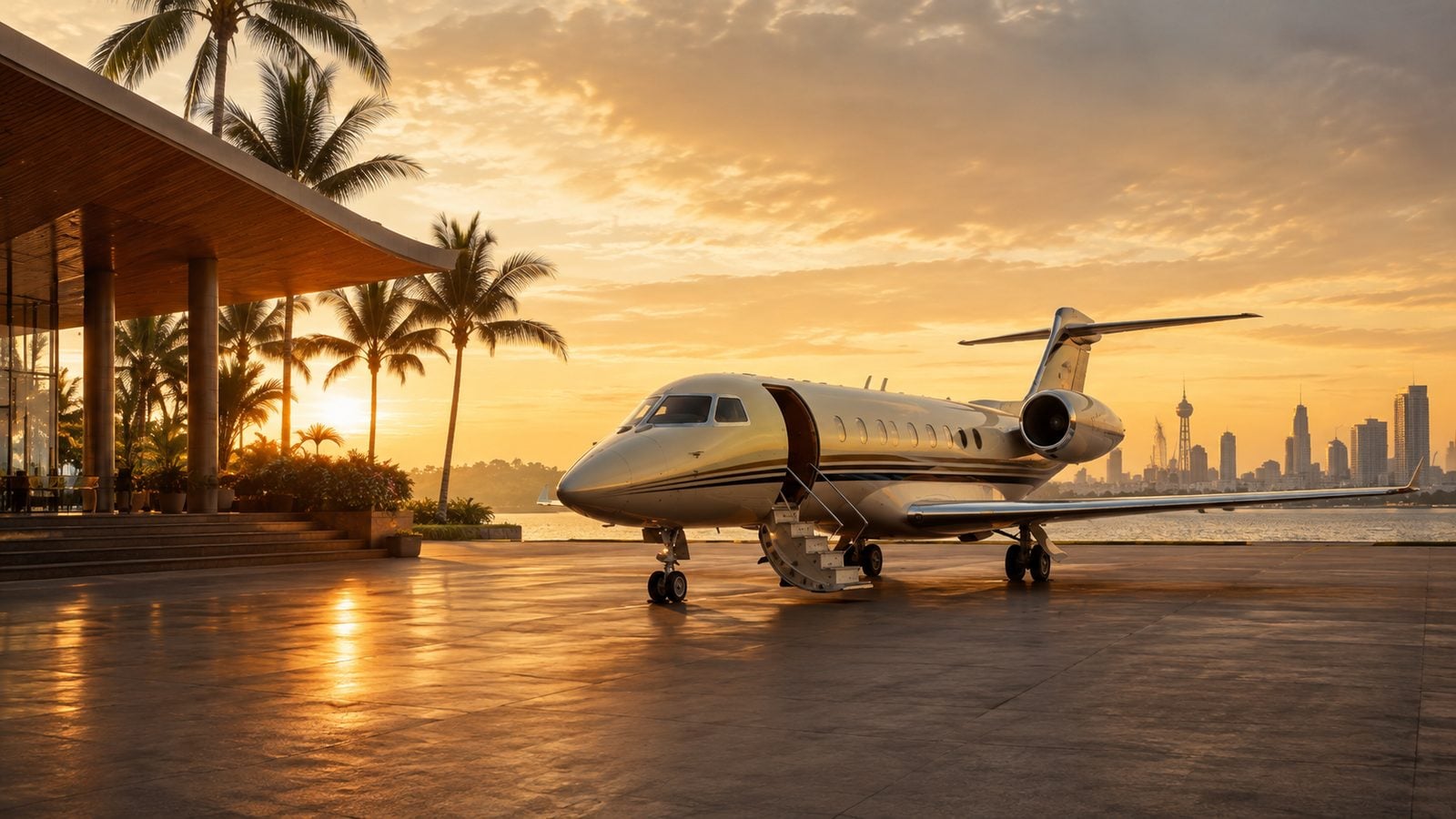
- Your car is directed to the private terminal entrance rather than the main terminal road.
- You are met by name at the door. Passports are collected in the lounge; baggage goes straight to the aircraft.
- Immigration and customs are processed inside the building — usually while you are seated.
- Departure is called when the crew is ready. You walk, or are driven, to the aircraft.
- On arrival the same process runs in reverse, with your onward car waiting on the apron or at the terminal door.
Airports Without an FBO
Much of what makes private aviation useful in Asia is the ability to reach airports with no private terminal at all — island strips, provincial fields, and airports whose general aviation traffic does not justify a permanent facility. At these, ASA arranges a handling agent, CIQ where the airport is an international point of entry, ramp transport and security for the duration of the stay.
Where an airport is not an international point of entry, the trip is planned with a clearance stop at one that is — a routing decision best made before the aircraft is booked rather than after.
How ASA Works With FBOs Across Asia
ASA is not an FBO operator. The ASA Group and its subsidiaries act solely as air charter brokers and do not own, maintain or operate any aircraft — which means ASA is the client of the FBO rather than its owner, and chooses the terminal that suits the trip rather than the one it happens to run.
In practice that means arranging slots, parking and CIQ clearance, briefing the terminal on the passenger profile and any security requirement, arranging catering and VIP transfers, and providing a dedicated supervisor on site for every arrival and departure. Full detail on the wider service is on our ground handling page.
Since 1999 the ASA Group has been a trusted name in general and business aviation services across Southeast Asia, with offices in Hong Kong, Thailand, Malaysia, Indonesia, Singapore and the Philippines, arranging flights at over 1,000 airports across the region.
Flying into Asia? Tell us your routing and dates and we will confirm the private terminal arrangement at each stop, along with permits, slots and ground handling.
FBOs and Private Terminals — Frequently Asked Questions
What does FBO stand for?
Fixed Base Operator. It is the organisation and terminal that handles private and business aircraft at an airport — lounge, CIQ, fuelling, ramp handling and crew facilities.
What is the difference between an FBO and a private jet terminal?
None in practice. “FBO” is the American term; “private jet terminal”, “VIP terminal”, “general aviation terminal” and “business aviation centre” are the phrases used more often in Asia.
Does every airport have an FBO?
No. Major gateways such as Don Mueang, Seletar, Hong Kong, Subang and Halim have dedicated private terminals. Many regional and island airports do not, and handling is arranged through a local agent instead.
How early do I need to arrive at an FBO?
Far less than at a commercial terminal — usually a short time before departure rather than the hours required for an international scheduled flight. ASA confirms the reporting time for your specific departure.
Can I be driven to the aircraft?
At many Asian FBOs, yes — airside vehicle access to the aircraft steps is permitted subject to the airport’s security rules and is arranged in advance.
Is immigration handled at the FBO?
At private terminals with resident CIQ, yes — passports are processed inside the building. ASA facilitates customs, immigration and quarantine clearance for a fast, hassle-free arrival and departure process.
Which airport should I use in Bangkok?
Don Mueang (DMK) is the primary business aviation field for Bangkok and is normally the better choice for a private jet. Suvarnabhumi (BKK) is available and sometimes preferable for onward connections, but slots and parking are tighter.
Which airport should I use for a private jet to Singapore?
Seletar (XSP) is Singapore’s dedicated business aviation airport and is the standard choice. Changi (SIN) can be used and has its own CIP terminal, but Seletar is generally faster for a private arrival.
Do I pay the FBO directly?
No. When ASA arranges the trip, FBO handling, CIQ, catering and transport are coordinated by ASA.
Can guests meet me inside the private terminal?
Usually yes. Private terminals normally allow companions and greeters into the lounge, which commercial terminals do not.
Request Your Private Jet Charter Quote
Tell us your travel details and our charter experts will source the ideal aircraft, pricing, and availability—tailored to your schedule, anywhere in the world.