Yes, you can fly a private jet with pets in Asia, and for many owners it is the only way to keep a dog or cat in the cabin with the family. The flight is straightforward; the planning that matters is on the ground: every country sets its own rules for bringing animals in, and some require months of preparation. This guide explains how pet travel works on a private charter and what to check for Singapore, Hong Kong, Thailand, Japan and Bali.
At a glance
| Detail | Value |
|---|---|
| Pets in the cabin | Yes, with operators that accept animals |
| Import rules | Apply in full on private flights |
| Longest lead time | Japan: around 7 months |
| Singapore | Import licence; quarantine of at least 30 days from higher-risk countries |
| Bali | Pet import through Denpasar is prohibited |
| Where to start | The destination’s animal authority |
Why owners choose a private charter for their pets
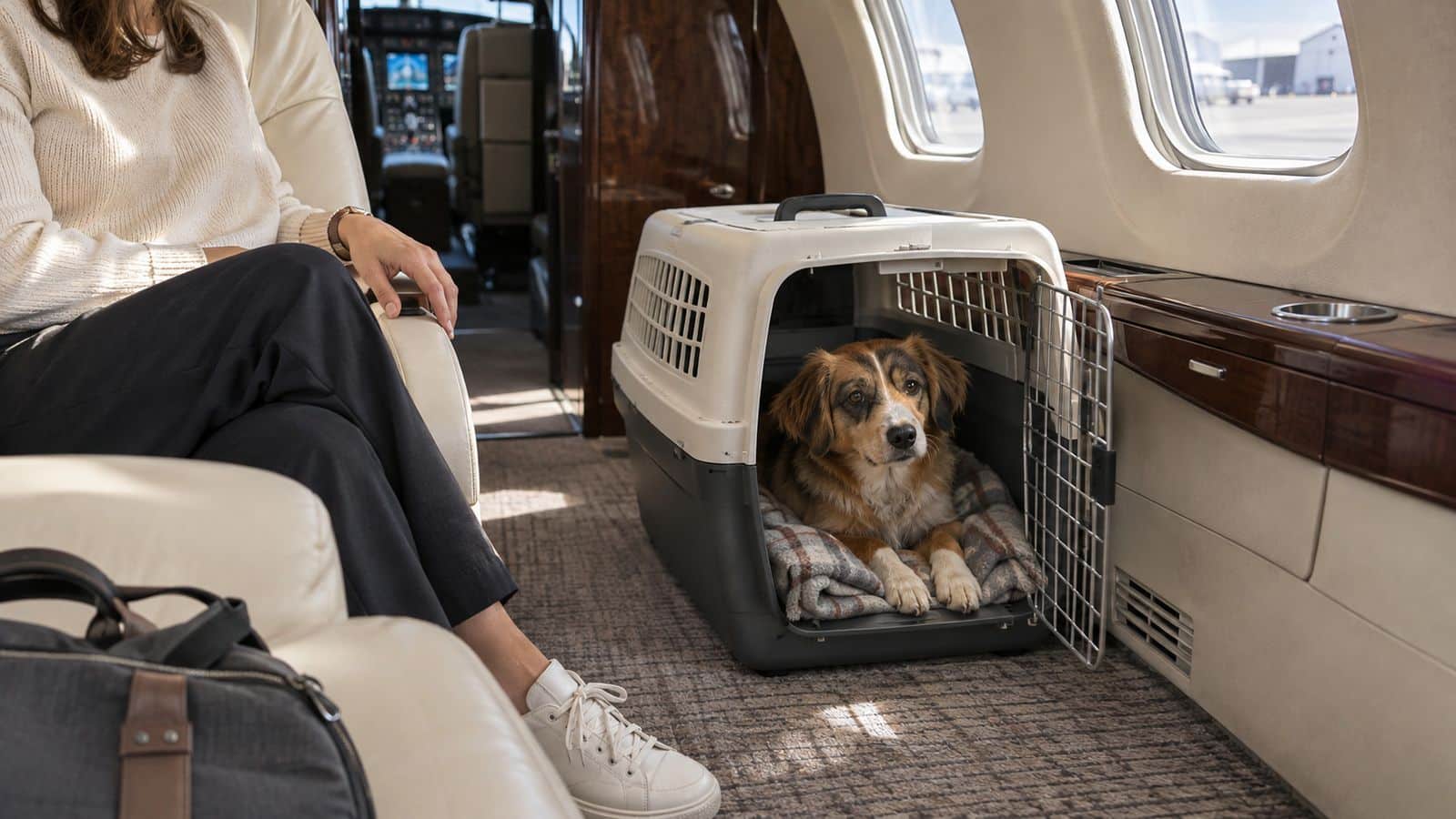
Many airlines carry larger dogs only in the cargo hold, and some do not accept certain breeds at all. On a private charter, operators that accept animals allow them to travel in the cabin with you, so your pet stays with the family from the car to the destination. You also avoid the airline cargo process, long check-in times and connecting flights, and you leave from a private terminal where there is space and time to settle the animal before boarding.
For families relocating between Hong Kong, Singapore, Bangkok and Tokyo, or travelling for a long stay, that difference is often what decides the trip.
The operator’s side: pets on board
Not every aircraft operator accepts animals, and those that do set their own conditions. When you mention a pet in your enquiry, the aircraft proposed will be one that accepts pets in the cabin, with these details confirmed in advance:
how many animals, their size and breed;
whether you already have the required import and export documents in hand;
that most operators charge a pet fee on top of the charter rate;
that you are happy to sign a waiver acknowledging the risks of travelling with pets, which is especially relevant for certain breeds of cats and dogs.
Before any aircraft is proposed, we also check the operator’s Air Operator Certificate and that its insurance covers the specific flight. Read more on how ASA selects operators.
Destination rules are the real lead time
Flying privately does not change a country’s animal import rules. The same veterinary requirements apply to a pet on a private jet as to one arriving by airline, and some countries also limit which airports animals can enter through. The table summarises where to start for each destination.
| Destination | Authority | Key points to check |
|---|---|---|
| Singapore | Animal & Veterinary Service (AVS), part of NParks | Import licence; rabies risk schedule of the exporting country; serology test; quarantine of at least 30 days from higher-risk countries; breed and housing restrictions |
| Hong Kong | Agriculture, Fisheries and Conservation Department (AFCD) | Special permit before arrival; health certificate; quarantine depends on the country of origin |
| Thailand | Department of Livestock Development (DLD) | Import permit; health certificate; rabies vaccination record |
| Japan | Animal Quarantine Service (MAFF) | Microchip; two rabies vaccinations; antibody test; 180-day wait; notice at least 40 days before arrival |
| Bali, Indonesia | Indonesian quarantine authorities | Pet import and export through Denpasar is prohibited except in transit |
Rules change. Always check the current requirements with the official authority for your destination before booking.
Singapore
Singapore’s requirements depend on the rabies risk schedule of the country your pet is travelling from. Pets from higher-risk countries need a rabies antibody test, taken between 90 days and 12 months before export, and a stay of at least 30 days at the Animal Quarantine Centre, which has to be reserved in advance. All pets need an import licence and an inspection booked at least five days before arrival, and some dog breeds are not permitted. Singapore also licenses pet cats and dogs and limits the number per home, so check the AVS rules for your housing type. AVS inspects pets arriving by air at the Changi Animal & Plant Quarantine Station, so confirm with AVS before planning an arrival at Seletar. Full details are on the AVS website.
Hong Kong
Dogs and cats entering Hong Kong need a special permit from the Agriculture, Fisheries and Conservation Department, issued before travel, plus a veterinary health certificate. Whether quarantine is required depends on the country your pet is coming from. See the AFCD website for the current conditions.
Thailand
Bringing a pet into Thailand requires an import permit from the Department of Livestock Development, a health certificate from the exporting country and an up-to-date rabies vaccination record. Requirements vary by species and origin, so check the DLD website before travelling.
Japan
Japan has some of the strictest pet import rules in the region. From most countries in Asia, a dog or cat needs a microchip, at least two rabies vaccinations, and a rabies antibody test at a designated laboratory. The animal can then enter Japan only after a 180-day waiting period counted from the blood sample date. The Animal Quarantine Service must be notified at least 40 days before arrival, and dogs can only enter through designated airports and seaports. Plan at least seven months ahead. The full process is on the Animal Quarantine Service website.
Bali
Importing or exporting pets through Denpasar, Bali’s international airport, is prohibited except in transit. Pets may enter Indonesia through other points of entry, but Bali has strict regulations for rabies-susceptible animals.
Documents to prepare
Requirements differ by country, but most pet journeys in Asia involve the same core documents. Start gathering them as soon as your travel dates are likely:
Microchip record, with an ISO-standard microchip implanted before the rabies vaccination.
Vaccination records, including rabies and the core vaccines the destination requires.
Rabies antibody test result, where required, from an approved laboratory.
Import permit or licence from the destination authority.
Veterinary health certificate, issued and endorsed close to the departure date.
A specialist pet relocation agent can manage these on your behalf, which many families find worthwhile for Japan and Singapore in particular. Once your pet’s paperwork timeline is clear, the flight can be planned around it.
On the day: arriving at the private terminal with your pet
Private terminals give you space and time that a busy airline check-in cannot. You arrive shortly before departure, your pet can stretch its legs, and boarding is calm and quick. On arrival, the animal’s documents are checked by the destination’s officials as part of clearance. Our guide to FBOs and private terminals in Asia explains how the terminals work, and our personalised charter service page covers other arrangements for your flight.
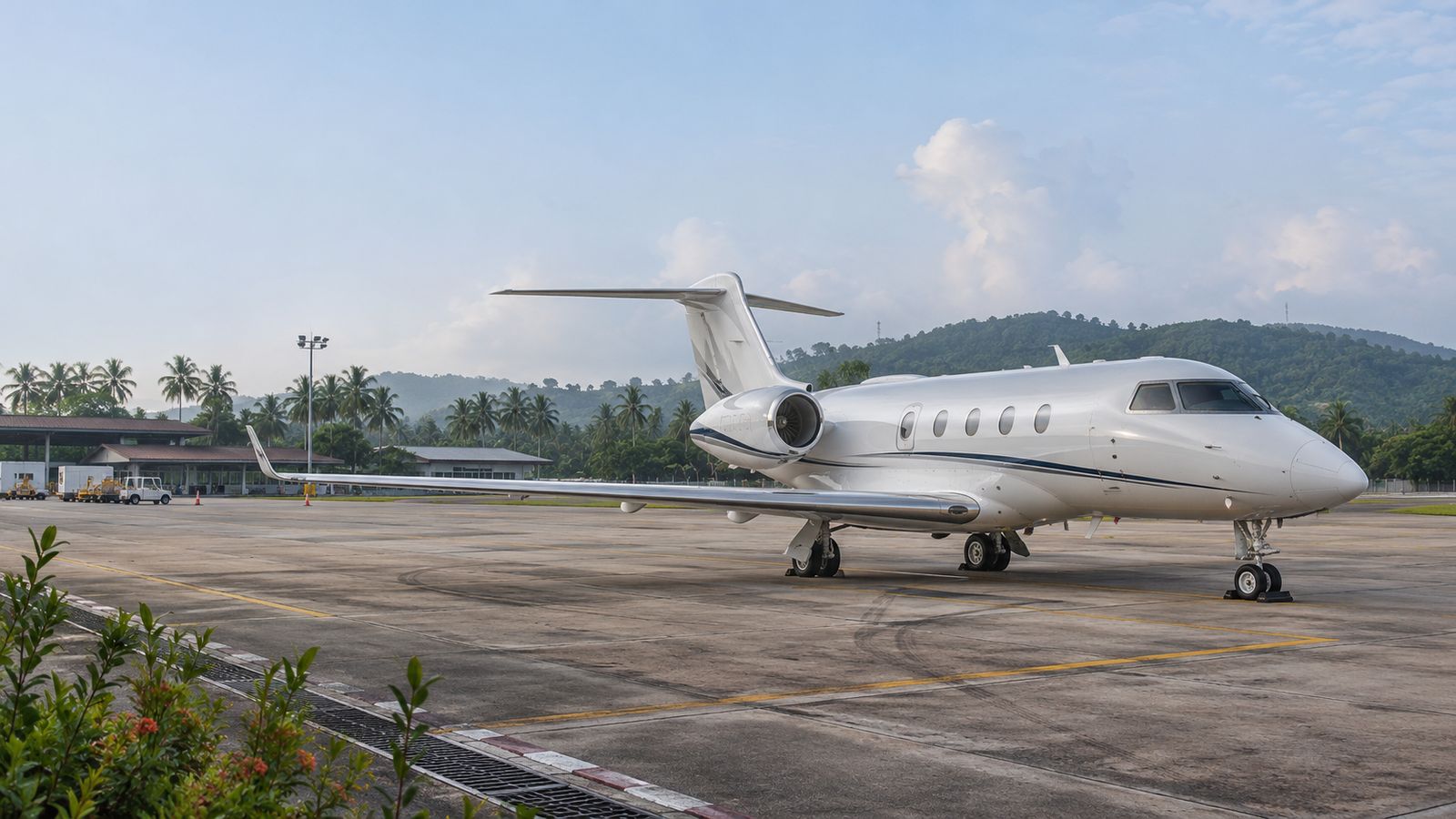
We prefer a week’s notice before the departure date to ensure all permits and approvals are in hand. If you need to fly sooner, contact our charter team and we will check whether it is operationally viable at short notice. For a pet journey, the destination’s animal import process usually takes far longer than the flight booking, so begin there.
Travelling with your dog or cat? Tell us your route, dates and your pet’s size and breed, and our charter team will come back with options.
Private jet with pets — frequently asked questions
Can my dog fly in the cabin on a private jet?
Yes, on aircraft whose operator accepts pets. Conditions set by the operator, such as a carrier or crate for the flight’s duration, are confirmed before you book.
Do I still need an import permit if I fly privately?
Yes. A country’s animal import rules apply however your pet arrives. Singapore, Hong Kong, Thailand and Japan all require import permits or advance notification, along with vaccination and health documents.
How far in advance should I plan a pet charter?
Start with your destination’s import rules, which set the timeline. Japan needs around seven months from the start of the process, including a 180-day wait after the rabies antibody blood test. Singapore can need several months for pets from higher-risk countries. The flight itself can be arranged much closer to departure.
Are there size or breed limits on private jets?
Each operator sets its own policy, and some destinations restrict certain breeds. Singapore, for example, does not allow some dog breeds to be imported. Share your pet’s size and breed when you enquire so both can be checked.
Can pets fly privately into Japan?
Yes, provided the animal meets Japan’s import requirements: a microchip, two rabies vaccinations, an antibody test, a 180-day wait after the blood sample, and notification at least 40 days before arrival. Dogs must enter through designated airports.
Can I bring my pet to Bali on a private jet?
No. Importing pets through Denpasar, Bali’s international airport, is prohibited except in transit, and this applies to private flights too.
Sources and references
Japan: Animal Quarantine Service, import of dogs and cats from non-designated regions.
Singapore: AVS / NParks, flowchart for importing dogs and cats (Schedules I–III).
Bali: Universal Weather & Aviation, Business Aviation Destination Guide: Indonesia.
Hong Kong: Agriculture, Fisheries and Conservation Department. Thailand: Department of Livestock Development.
Request Your Private Jet Charter Quote
Tell us your travel details and our charter experts will source the ideal aircraft, pricing, and availability—tailored to your schedule, anywhere in the world.