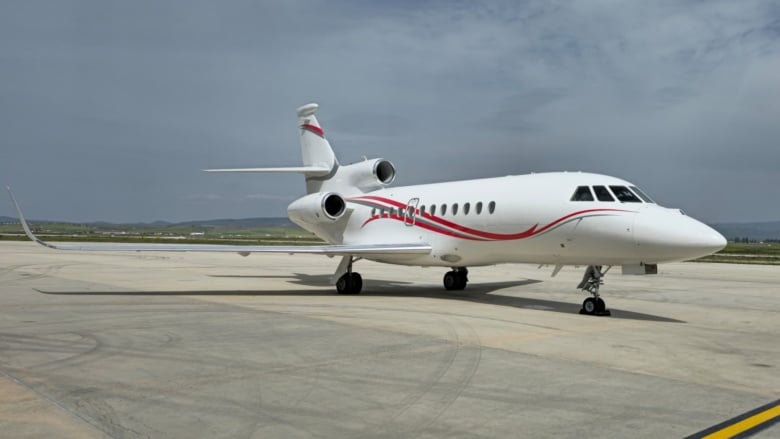
Private air charter is the arrangement of an entire aircraft for a specific journey, at a time and on a route you choose. This guide explains the whole process — who the parties are, how a charter is actually put together, what sets the price, what permits and ground handling involve, and what happens on the day of the flight. It is written for the person arranging their first charter, and for the executive assistant, travel manager or family office arranging one on somebody else’s behalf.
Private Air Charter, Defined
When you charter an aircraft, you are booking the aircraft itself rather than a seat on it. The whole cabin is yours, the departure time is yours, and the route is set by where you need to go rather than by an airline’s network.
That is the essential difference from scheduled aviation, and it produces every other difference that follows. There is no published timetable to fit around, no connection to miss, no gate, and no fixed set of destinations — a private aircraft can use any airport with a runway long enough for it and permission to land. ASA arranges flights at over 1,000 airports across Southeast Asia, against the few dozen served by international scheduled airlines.
Charter is arranged on a per-trip basis. You pay for the specific journey, and the commercial relationship ends when the trip does. That distinguishes it from fractional ownership, where a buyer purchases a share of a specific aircraft and a fixed allocation of hours, and from outright ownership, where the aircraft, crew, maintenance and hangarage are the owner’s responsibility year-round.
For organisations that fly often enough to want continuity but not enough to justify an aircraft of their own, charter can be arranged as a long-term charter programme — an agreed set of programme rates and priority access across a defined period, still flown on operator aircraft with no capital commitment.
Who Is Involved: Operators, Brokers and You
The operator
The operator holds the Air Operator Certificate (AOC) issued by a civil aviation authority, employs the crew, maintains the aircraft and is legally responsible for the flight. Everything about safety, maintenance and crew qualification sits with the operator and its regulator.
The broker
A charter broker sources the aircraft. Brokers hold no fleet of their own, which is precisely what makes them useful: a broker can look across every certified operator in a region and match the aircraft to the trip rather than fitting the trip to the aircraft available. A broker also arranges what surrounds the flight — permits, ground handling, private terminal access, catering, transport and security — and carries the trip end to end so the client deals with one company instead of six.
The client
You define the requirement: where, when, how many passengers, what has to happen at each end. The more precisely that is stated at the outset, the better the aircraft match and the fewer surprises in the quote.
ASA Air Charter has operated as an independent broker in Asia since 1999 and also provides ground handling across the region, which means the aircraft is sourced and the trip is handled by the same company.
How a Private Charter Is Actually Arranged
The sequence below is what happens between an enquiry and a departure. On a straightforward regional trip it can move quickly; on a multi-country itinerary with permit requirements it takes longer, and knowing which is which is most of what experience buys.
- Enquiry. You provide the route, dates, passenger numbers and any specific requirement — a cabin you can stand up in, a medical configuration, a pet in the cabin, a stopover, a firm return time.
- Feasibility. We check whether the trip can be flown as stated: runway length and aircraft performance at each airport, airport operating hours, slot and parking availability, permit lead time for every state on the route, and crew duty limits across the full itinerary.
- Sourcing. Certified operators with suitable aircraft in or near the departure region are approached. Positioning matters: an aircraft already in Bangkok will almost always quote better for a Bangkok departure than an identical aircraft in Hong Kong, because somebody has to pay for the sector that brings it to you.
- Vetting. Before an operator is put forward, we verify its documentation against your mission — see the safety section below.
- Quotation. You receive aircraft options with type, cabin configuration, year, operator and an all-in price. A complete quote includes flight time, positioning, landing and handling fees, permits, crew costs, catering and taxes — not just the hourly rate.
- Confirmation. The charter agreement is signed and the aircraft is held. This is the point at which the aircraft is genuinely yours for the trip.
- Permits and slots. Landing and overflight permits are obtained from each civil aviation authority on the route, and slots and parking are secured at each airport. We prefer a week’s notice before the departure date to ensure all permits and approvals are in hand. If you need to fly sooner, contact our charter team and we will check whether it is operationally viable at short notice.
- Ground arrangements. Private terminal access, customs and immigration processing, catering, ground transport, crew accommodation and any security requirement are confirmed at both ends.
- Final briefing. You receive the aircraft registration, crew details, terminal address, reporting time and the contact number for the coordinator who will be on the ground.
- Departure. You arrive at the private terminal shortly before take-off, clear immigration inside the building and board.
What Sets the Price of a Charter Flight
Charter is quoted per trip rather than per seat, and six factors do most of the work in the final figure.
- Aircraft category. A turboprop, a light jet and an ultra long range jet are different orders of cost per hour because they are different aircraft doing different jobs.
- Flight time. The billable clock runs from engine start to engine shutdown, which is a little longer than the airborne time.
- Positioning. If the aircraft is not already where you are, the sector that brings it to you is part of the trip. This is the single biggest swing factor on regional charters and the reason quotes for the same route can differ substantially between operators.
- Airport and handling charges. Landing, parking, navigation and handling fees vary widely by airport, and a private terminal at a major international gateway costs more than a regional field.
- Permits and overflight. Every state on the route is a separate approval with its own fee.
- Timing. Peak seasons, public holidays, major events and overnight crew stays all move the number, as does anything that pushes the crew’s duty period.
A reputable quote itemises all of this. When comparing two quotes, compare the all-in total for the same aircraft category on the same dates rather than the headline hourly rate — the hourly rate on its own tells you very little about what a trip will cost.
Matching the Aircraft to the Journey
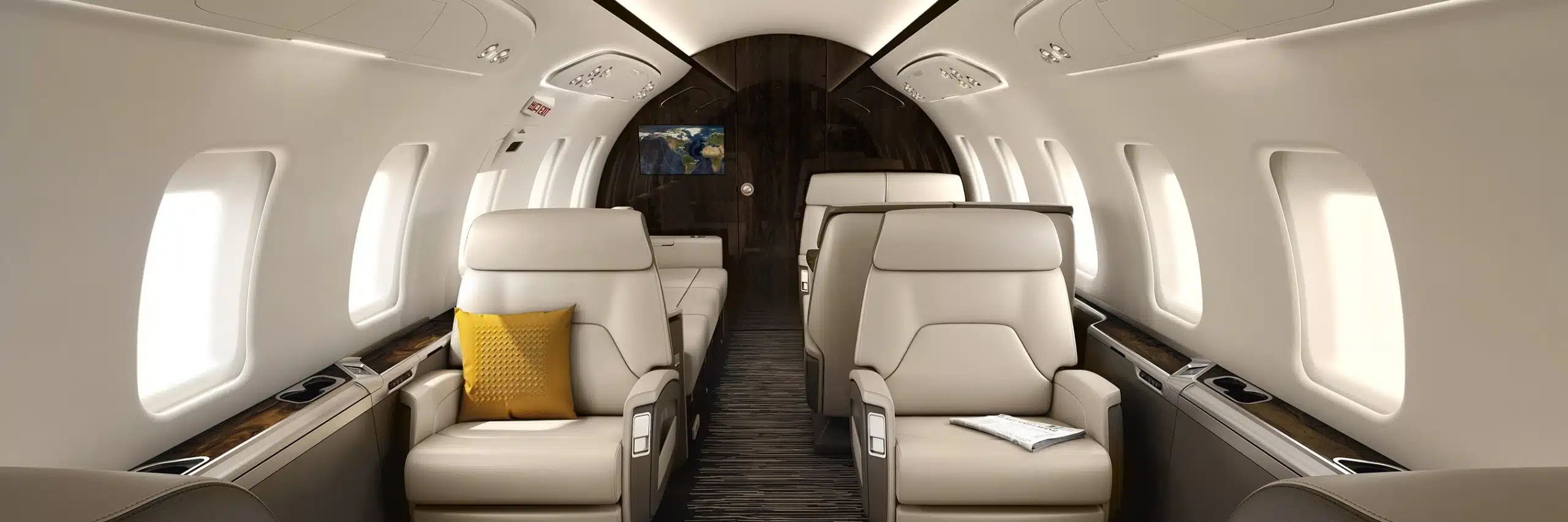
| Category | Passengers | Range | Used in Asia for |
|---|---|---|---|
| Helicopters | Varies by type | Short sector | City transfers, island and yacht access, offshore and survey work |
| Turboprops | Up to 11 on a King Air 350i | Short regional | Short sectors and short or unpaved runways at island and provincial fields |
| Very light jets | 2–4 | ~2,200 km | The shortest jet sectors |
| Light jets | 4–7 | ~3,500 km | Bangkok–Phuket, Singapore–Kuala Lumpur, Hong Kong–Taipei class sectors |
| Midsize jets | 6–9 | ~5,500 km | Bangkok–Singapore, Singapore–Bali, most intra-Southeast Asia routes |
| Super midsize jets | 8–10 | ~7,500 km | Longer intra-Asian routes with a stand-up cabin |
| Heavy jets | 8–14 | ~12,000 km | Asia to the Middle East, Australia or Europe with a full cabin |
| Ultra long range jets | 10–19 | 14,000 km+ | Non-stop intercontinental — Asia to Europe or the US west coast |
| VIP airliners | Airliner capacity | Varies by type | Delegations, sports teams, touring parties and large corporate groups |
Range figures are nominal. Actual range on the day depends on payload, winds, temperature and the required fuel reserves, which is why a good broker checks performance for your specific routing rather than quoting from a brochure.
Permits, Ground Handling and Why Lead Time Matters
The part of private aviation least visible to passengers is the part most likely to move a departure date. A private aircraft crossing an international border needs a landing permit from the destination state and an overflight permit from every state whose airspace it crosses on the way. Each is a separate application to a separate authority, and none of them is a formality.
Lead times run longer where the routing crosses several states, where the passengers are government or diplomatic, where dangerous goods are carried, or where the destination airport restricts general aviation access. Applications submitted with complete documentation the first time are approved materially faster than those needing resubmission, which is why an experienced broker asks for aircraft, crew and passenger paperwork early.
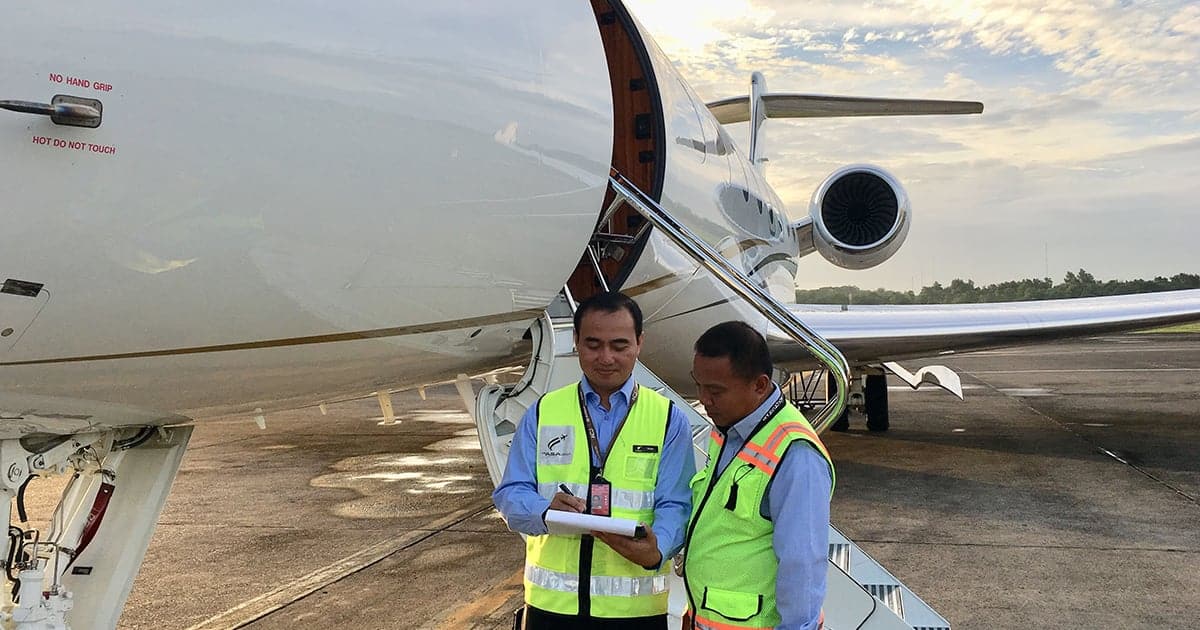
Alongside permits sits ground handling: the airport slot, the parking stand, ramp supervision, customs and immigration processing, catering, and transport for passengers and crew. At the region’s busiest fields during Chinese New Year, Songkran, Golden Week or a major summit, parking rather than runway capacity is what decides whether a trip is possible.
ASA obtains landing and overflight permits for scheduled, non-scheduled, diplomatic and medevac flights across Asia through its aviation authority network, and coordinates ground handling at over 1,000 airports across Southeast Asia.
Safety: What ASA Checks Before an Aircraft Is Proposed
Every charter flight is operated by a company holding an Air Operator Certificate issued by its national civil aviation authority, flown by crew licensed and current on type, on an aircraft maintained to an approved programme. ASA is a broker: the ASA Group and its subsidiaries act solely as air charter brokers and do not own, maintain or operate any aircraft.
That makes the operator check the substance of what a broker actually does. Before ASA proposes an operator for a mission, it requires:
- An in-date Air Operator Certificate (AOC) — the official approval from a country’s civil aviation authority that lets a company run commercial flights carrying passengers or cargo.
- A Certificate of Insurance (COI) verifying that the aircraft is fully covered financially for the specified mission — checked against that mission, not as a blanket condition.
- For helicopter missions, the AOC Operations Specifications, which state which categories of aerial mission the operator is approved for. Approval for one kind of helicopter work does not automatically cover another.
- Where the routing requires it, valid FAOC or FOP approvals, which permit a foreign operator to land or take off in specified countries.
These are checked before any aircraft is put in front of you, so every option on a quote has already cleared the same bar.
What the Day of the Flight Looks Like
The practical experience is short. You are driven to a private terminal rather than the main airport road, usually arriving fifteen to thirty minutes before departure. You are met by name at the door, your passport is taken in the lounge, and your baggage goes directly to the aircraft. Immigration and customs are processed inside the building, frequently while you are seated.
When the crew is ready you walk — or at many Asian terminals are driven — to the aircraft. There is no gate, no boarding group and no queue. On arrival the process runs in reverse, and at most private terminals in the region you are in your onward car within about ten minutes of the aircraft doors opening.
Catering is whatever was ordered for the trip. The cabin is configured for your party. If plans change in the air and the destination airport can accommodate it, a diversion is a conversation with the crew rather than a rebooking.
Who Charters, and Why
For the individual traveller
The recurring reasons are time, reach and privacy. A private aircraft removes the airport queue at both ends and flies directly to airports scheduled services do not serve, which frequently turns a two-connection day into a two-hour flight. It also allows a family or a party to travel together on their own schedule, with their own luggage arrangements, and without their movements being visible in a public terminal.
For the organisation
For companies, the argument is usually productivity rather than comfort. A team of six can reach three cities in a day and be home the same night — an itinerary that takes three days by scheduled service. Confidential discussion is possible in the cabin in a way it is not in a commercial one. Board members, deal teams and technical staff can be moved to a site at short notice when something needs attention immediately.
Beyond that, charter covers work that scheduled aviation simply does not do: medical evacuation and air ambulance transfers, government and diplomatic movements, sports team and touring party travel, urgent air cargo, and access to remote sites for resource, energy and infrastructure operations.
Frequently Asked Questions
What is private air charter?
The hire of an entire aircraft for a specific journey, at a time and on a route chosen by the client rather than by an airline timetable. The aircraft is operated by a certified operator and is normally arranged through a charter broker.
How far in advance should I book a private charter?
We prefer a week’s notice before the departure date to ensure all permits and approvals are in hand. If you need to fly sooner, contact our charter team and we will check whether it is operationally viable at short notice.
What is the difference between a charter broker and an operator?
The operator holds the Air Operator Certificate, employs the crew, maintains the aircraft and is legally responsible for the flight. The broker sources the aircraft across multiple operators, arranges permits, handling and ground logistics, and manages the trip end to end. ASA states plainly that it and its subsidiaries act solely as air charter brokers and do not own, maintain or operate any aircraft.
How much does a private charter flight cost?
It is quoted per trip, not per seat, and depends on aircraft category, flight time, positioning, airport and handling charges, permits and timing. A complete quote itemises all of these as a single all-in figure.
How many passengers can a private charter carry?
From four on a helicopter or light jet to more than a hundred on a VIP airliner. Aircraft category is chosen from passenger count, range, baggage and the runways at each end.
Can a private jet land at any airport?
Any airport with a runway suitable for the aircraft type, the required operating hours, and permission to land. That is a far wider set than scheduled airlines serve — ASA arranges flights at over 1,000 airports across Southeast Asia.
What is included in a charter price?
Aircraft and crew, flight time, positioning, landing, parking and navigation fees, ground handling, permits, standard catering and taxes. Ground transport, special catering, additional security and overnight crew costs are quoted separately where they apply.
Do I need a visa for the countries I overfly?
No — an overflight permit is an aircraft approval, not a passenger one. You need the normal entry requirements only for countries where the aircraft actually lands and you disembark.
Can I bring pets on a private charter?
In most cases yes, in the cabin, subject to the destination country’s import and quarantine rules. This should be raised at enquiry stage because the paperwork sits with the destination authority, not the operator.
How do I arrange a private charter with ASA?
Send your route, dates and passenger numbers. ASA checks feasibility and permit lead time, sources aircraft options from certified operators across the region, and quotes an all-in price with handling and permits included.
Planning a charter? Send us your route, dates and passenger numbers and we will come back with aircraft options and an all-in price including permits and ground handling.
Request Your Private Jet Charter Quote
Tell us your travel details and our charter experts will source the ideal aircraft, pricing, and availability—tailored to your schedule, anywhere in the world.