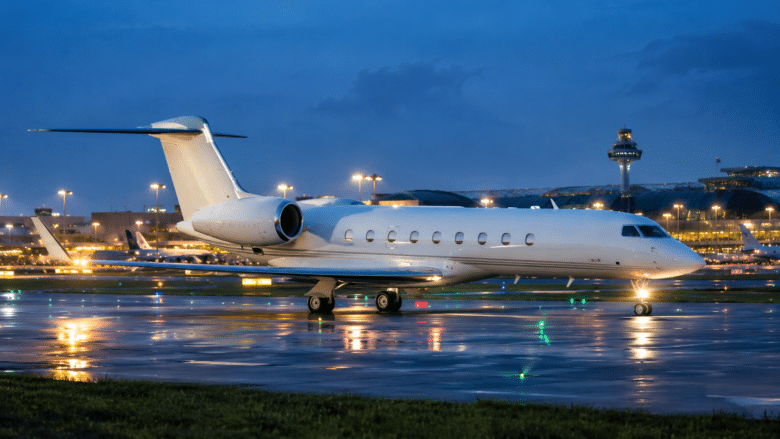
Most people compare private charter with first class on the wrong axis. They compare the seat. The seat is the least interesting difference. What actually changes is the shape of the day — where you can land, when you leave, who is in the cabin, and how much of the journey is spent inside an airport rather than in the air.
The Comparison That Matters Is Door to Door
Airlines and charter companies both quote flight time, which is the one number that barely differs. A commercial jet and a business jet cover a given regional sector in broadly the same time.
The journey is not the flight. It is the drive to the airport, the check-in queue, security, immigration, the walk to the gate, the boarding sequence, the taxi, the flight, the taxi again, the immigration hall, the baggage carousel and the walk to the car. On a regional route the flying is often less than half the total.
That is where private charter takes time back, and it does so at both ends of the flight rather than in the air.
| Stage | Commercial first class | Private charter flight |
|---|---|---|
| Arrival before departure | Hours ahead for an international flight | Shortly before departure, at the private terminal |
| Check-in | First class desk, then bag drop | Passport handed over in the lounge |
| Security | Priority lane in the central screening hall | Screened within the private terminal |
| Immigration outbound | Main immigration hall | Processed inside the private terminal, often while seated |
| To the aircraft | Lounge, gate, airbridge, boarding sequence | Short walk, or driven to the aircraft steps |
| Departure timing | The airline’s schedule | Yours, within slot and crew duty limits |
| Arrival to kerb | Immigration hall, then the baggage carousel | Baggage delivered at the aircraft or terminal door |
| Connections | Change of aircraft, second security screening | Direct, or a technical stop you stay on board for |
| Airports available | Airline network — dozens in Asia | Any suitable runway — ASA arranges flights at over 1,000 airports across Southeast Asia |
On a multi-city day the difference compounds. Three cities by scheduled service is normally a multi-day itinerary with hotel nights in between. By charter it can be a single day.
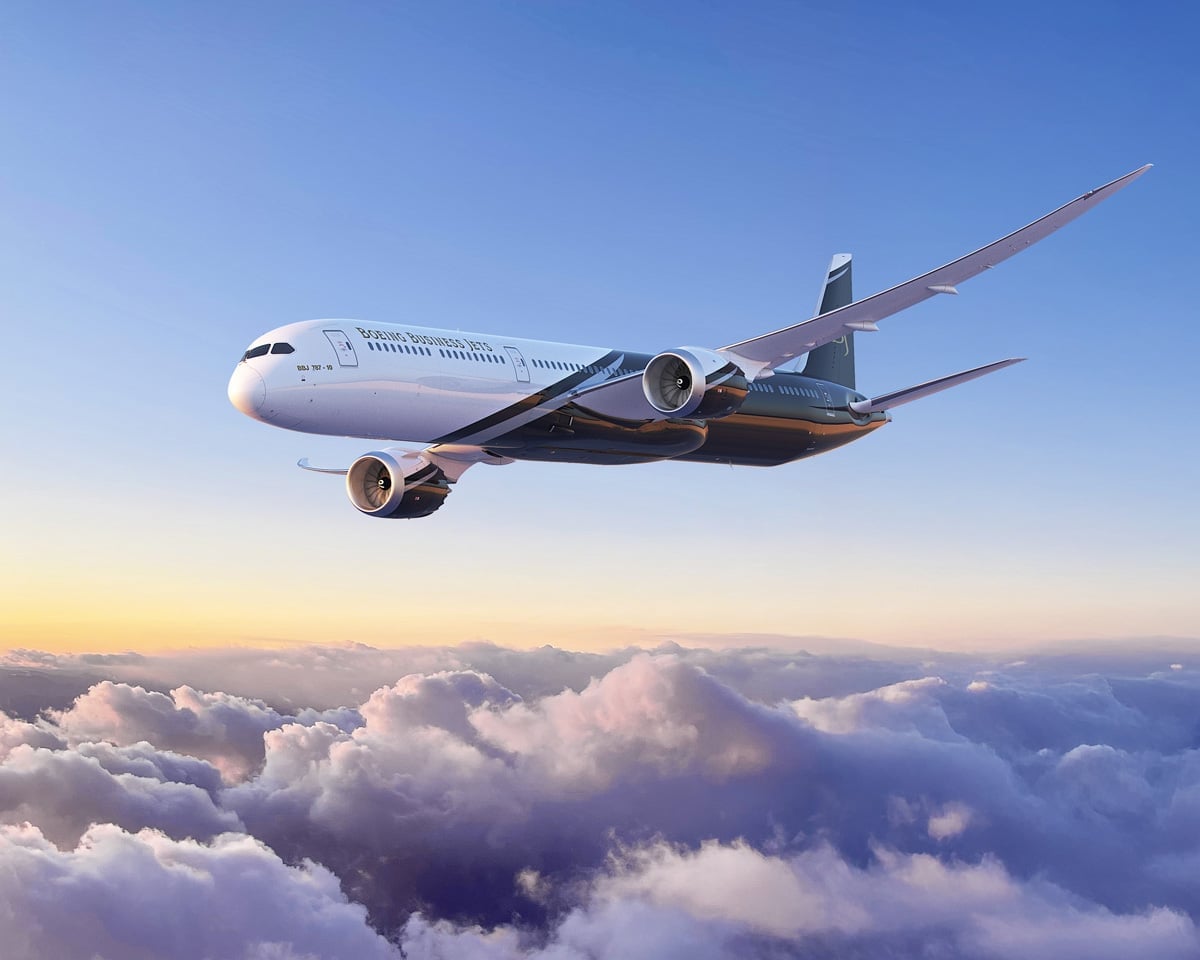
Routing: Where You Can Actually Land
Scheduled airlines fly the routes that fill aircraft. That serves the major city pairs extremely well and everything else poorly.
Private charter flights are constrained only by runway length, airport opening hours and permission to land. ASA arranges flights at over 1,000 airports across Southeast Asia, against the few dozen with international scheduled service. In practice that means:
- Resort and island destinations reached directly instead of via a hub and a long road transfer — Koh Samui, Langkawi, the Maldives atolls, Bali from a regional origin rather than through Jakarta.
- Provincial and secondary cities reached without backtracking to a national hub first.
- City airports closer to the centre than the main international field — Don Mueang in Bangkok, Halim in Jakarta, Subang in Kuala Lumpur, Songshan in Taipei, Seletar in Singapore.
- Remote sites for energy, resource, infrastructure and survey work where there is a strip but no airline.
- Multi-city itineraries flown in the order that suits the business rather than the order the network allows.
The routing advantage is usually worth more than the cabin. A flight that lands close to the meeting rather than hours from it changes what is possible in a day.
Privacy and Confidentiality
A first class cabin is private in the sense of having a door on the suite. It is not private in the sense that matters commercially: you are in a public terminal, in a shared lounge, on a passenger manifest, in view of other travellers, and within earshot of cabin crew and neighbouring passengers.
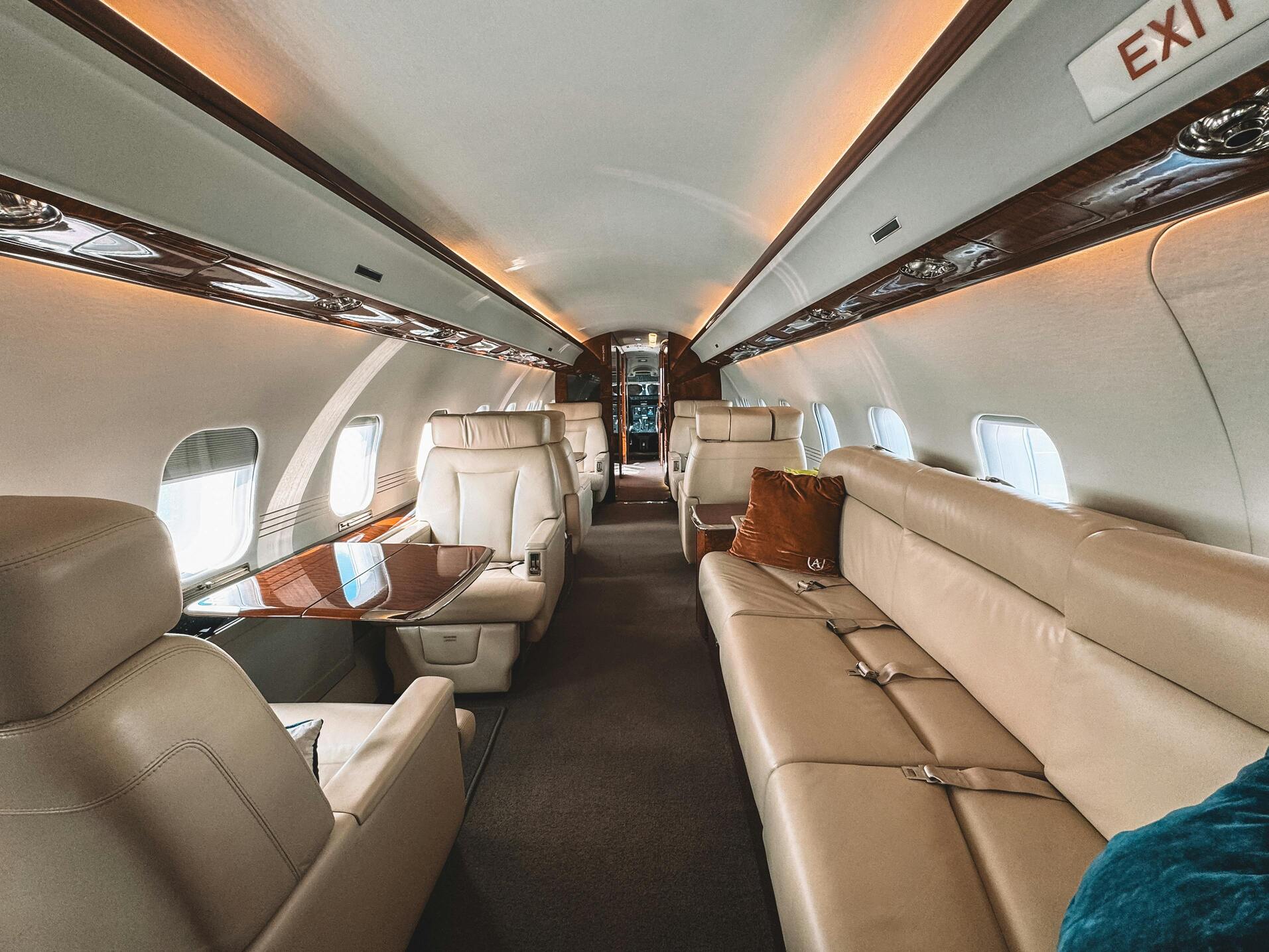
On a private charter the cabin contains your party and the crew. Documents can be on the table, a deal team can talk through a position for the whole sector, a family can travel without being recognised, and a principal’s movements are not visible in a departure hall. For government, diplomatic, corporate and high-profile clients this is frequently the reason for the charter rather than a benefit of it.
Where the passenger profile requires more than discretion, ASA arranges armed or unarmed close protection subject to the legal jurisdiction, discreet escort through terminals and private boarding, armoured vehicles on request, real-time threat monitoring during ground stops, and country-specific risk profiling. Full detail is on our private jet security page.
Schedule Control
An airline decides when the aircraft leaves. On a charter you do, within the airport’s operating hours, the slot allocation and the crew’s legal duty period.
That matters most when the day does not go to plan. A meeting that runs long is a missed flight and a rebooked night on a scheduled service; on a charter it is a message to the crew. A negotiation that finishes early means leaving early.
The reverse also holds: an aircraft chartered for a fixed itinerary waits for you. It does not depart without you, and it does not give your cabin to anybody else.
The Cost Comparison, Done Properly
First class is priced per seat. Charter is priced per aircraft. Comparing the two therefore depends entirely on how many people are travelling.
For one person on a long-haul trunk route with a convenient direct service, a first class ticket is straightforward and the arithmetic favours it. The comparison changes as passengers are added, because the charter price does not change with the headcount — a party of six pays the same for the aircraft as a party of two.
The figure that usually decides it for an organisation is not the fare comparison at all. It is the cost of the executive time released, plus the hotel nights and the working days that a multi-city scheduled itinerary consumes and a single charter day does not. That is a number most finance directors can calculate for their own people, and it is frequently larger than the difference in travel cost.
For a specific trip, the useful exercise is to price the charter against the fares you are actually looking at, on your actual dates. Send us the route and we will quote it with permits and ground handling included.
Group Travel Is Where the Gap Is Widest
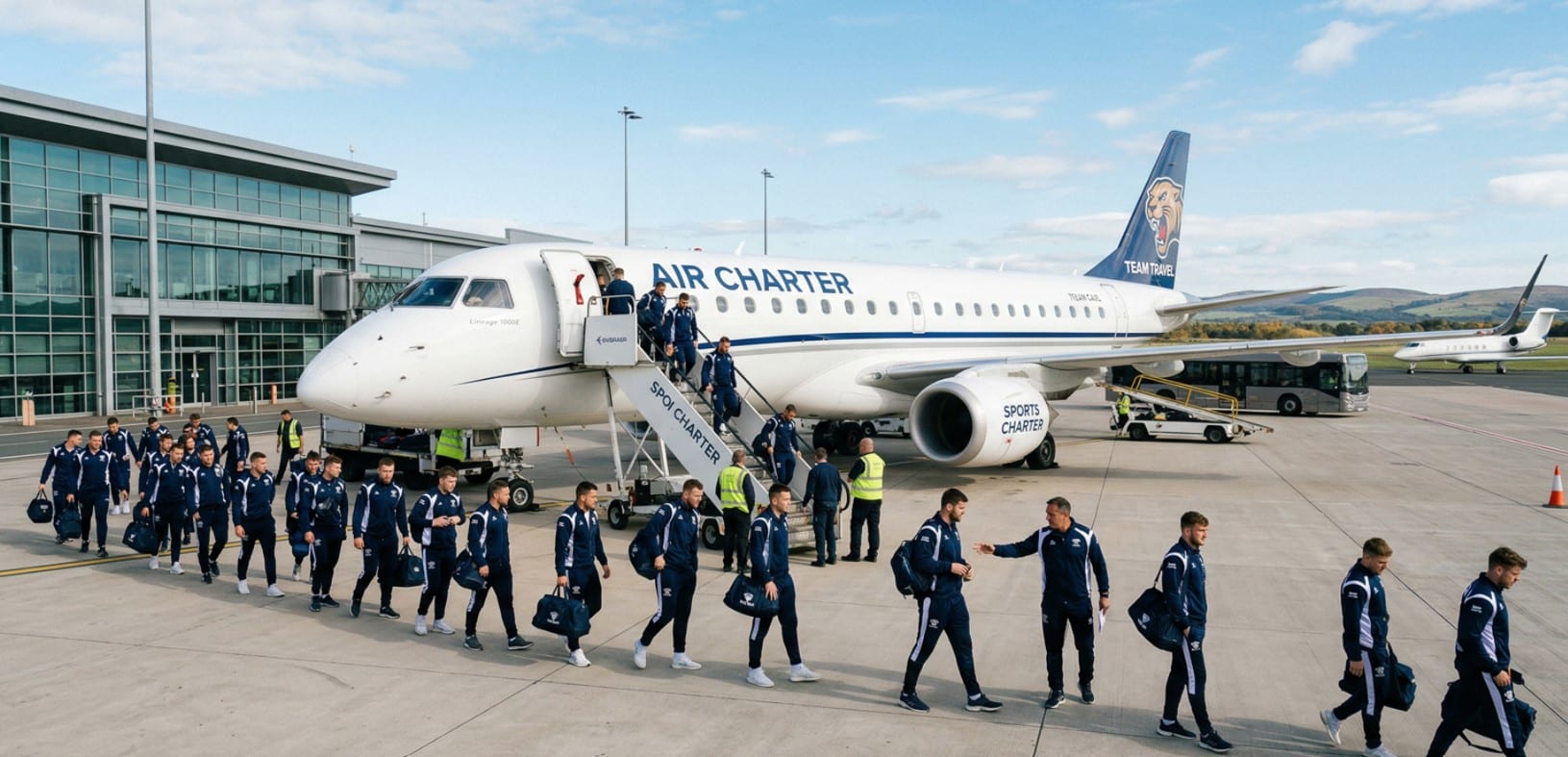
Moving a group by scheduled service means seats across several cabins, occasionally several flights, baggage and equipment as freight, and a schedule set by the airline. Everyone must be at the airport at the same early hour and everyone waits for the slowest part of the process.
On a charter the group travels as one unit. The aircraft is configured for the party, equipment travels in the hold on the same aircraft as the people who need it, and the departure time is set by the fixture, the meeting or the shoot. For sports teams, touring productions, corporate delegations and government parties, this is the ordinary reason charter is used.
What Stays the Same
- Safety regulation. Both are flown by operators holding an Air Operator Certificate, by licensed crew, on aircraft maintained to an approved programme and overseen by a national civil aviation authority. On a charter the operator holds the certificate; ASA acts solely as the broker.
- Border formalities. Passports, visas and customs rules apply identically. The processing is faster on a charter because it happens in a small terminal, not because the requirements are different.
- Weather and airspace. A private aircraft is subject to the same weather minima, airspace restrictions and air traffic control as any other.
- Catering standards. Both can be excellent. On an ASA charter it is a personalised menu arranged for your party rather than chosen from a fixed list.
How to Decide Which Fits the Trip
- Count the travellers. Several people moving together is the point at which charter economics start to work on a regional route.
- Count the sectors. One direct flight favours scheduled service. Two or more sectors, or a multi-city day, favours charter heavily.
- Check the destination. If the place you actually need to be is not near a major airport, charter is often the only way to arrive the same day.
- Check the schedule. If the departure or return time is fixed by something that cannot move, charter removes the risk of the airline’s timetable not matching it.
- Check the sensitivity. If the conversation, the passengers or the movement itself is confidential, the cabin matters more than the fare.
For most organisations the answer is not one or the other permanently. It is scheduled service on the long trunk routes, and charter for the regional legs, the multi-city days and the trips where the destination has no airline.
Frequently Asked Questions
Is a private charter flight faster than first class?
In the air, no — the flight times are similar. Door to door, yes, and often substantially. The saving comes from arriving shortly before departure rather than hours ahead, immigration processed inside a private terminal, no connections, and baggage handled at the aircraft.
How much more does a private charter cost than first class?
It depends entirely on the number of travellers, because charter is priced per aircraft and first class per seat. For one person on a direct long-haul route, first class is normally the economic choice. For a group on a regional or multi-city itinerary, the comparison narrows considerably once hotel nights and lost working days are counted.
Can private charter flights reach airports airlines do not serve?
Yes. Charter is limited only by runway suitability, airport operating hours and permission to land. ASA arranges flights at over 1,000 airports across Southeast Asia, against a few dozen with international scheduled service.
How far in advance do I need to book a private charter?
We prefer a week’s notice before the departure date to ensure all permits and approvals are in hand. If you need to fly sooner, contact our charter team and we will check whether it is operationally viable at short notice.
Are private charter flights as safe as commercial airlines?
Both are flown by operators holding an Air Operator Certificate from a national civil aviation authority, by licensed crew, on aircraft maintained to approved programmes. Before proposing an operator, ASA requires an in-date AOC and a Certificate of Insurance covering the specified mission, plus AOC Operations Specifications for helicopter work and FAOC or FOP approvals where the routing requires them.
Can I change my departure time on a private charter?
Yes, within the airport’s operating hours, the slot allocation and the crew’s legal duty period. This is one of the main practical differences from a scheduled ticket.
Is the cabin actually better than first class?
On a large-cabin jet it is comparable or better, and it is entirely yours. On a light jet it is a cabin sized for a short regional sector, where the advantage is the routing and the time rather than the space.
Do I still need a visa when flying privately?
Yes. Entry requirements are set by the destination country and are identical however you arrive. The processing is faster because it happens at a private terminal.
Can I bring more baggage on a private charter?
Usually yes, subject to the aircraft’s hold volume and weight limits. Sports equipment, instruments and production gear travel on the same aircraft as the party rather than as separate freight.
Who should I speak to about comparing a specific trip?
Send ASA the route, dates and passenger numbers and the charter desk will quote the charter option, including permits and ground handling, so you can compare it against the fares you are looking at.
Comparing a specific trip? Send us the route, dates and passenger numbers and we will quote the charter option with permits and ground handling included, so you can put it next to the fares.
New to charter? Our companion guide explains what private air charter is and how a flight is arranged, from enquiry to take-off.
Request Your Private Jet Charter Quote
Tell us your travel details and our charter experts will source the ideal aircraft, pricing, and availability—tailored to your schedule, anywhere in the world.